
Following the kastom roads: Anna Naupa becomes the first ni-Vanuatu PhD graduate from ANU
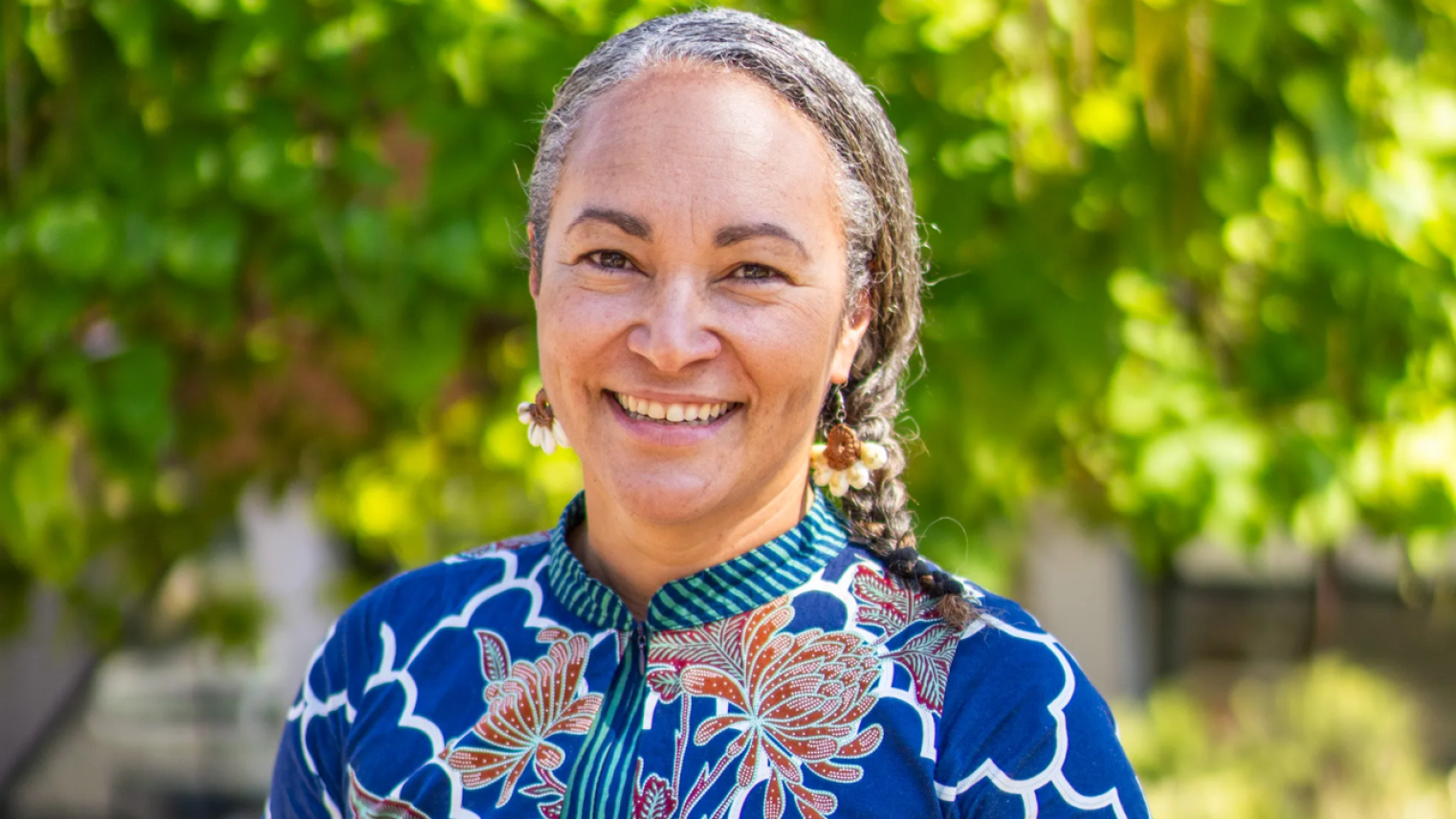
When Anna Naupa submitted her PhD thesis at ANU, she became the first ni-Vanuatu person to earn a doctorate from the University.
Now, she has added another milestone to that journey. Naupa has been appointed Director General of the Secretariat to Melanesian Spearhead Group (MSG), becoming the first ni-Vanuatu, and woman, to lead the regional organisation since its founding in 1986.
Surprisingly, Anna Naupa spent years avoiding a PhD.
Although she had completed an Honours degree and two master's degrees, she never felt compelled to take the next academic step. Instead, she built a career spanning policy, international relations and community engagement across the Pacific, moving between local, national and regional spaces.
Then, as she puts it, the "knowledge, experience and opportunity" aligned.
There was also a growing urgency. Oral histories held by Erromangan elders and the experiences of retired Vanuatu diplomats needed to be recorded before they disappeared from living memory.
"If I didn't take the time to document valuable oral histories and cultural knowledge from Erromangan island elders and retired Vanuatu diplomats," Naupa says, "their stories and experiences might become mere footnotes—or worse, overlooked—in future history."
That decision led her to undertake a PhD through the ANU School of Culture, History & Language (CHL), made possible with the scholarship support of the Evolution of Cultural Diversity Initiative. Upon submitting her thesis, Naupa became the first ni-Vanuatu person to earn a PhD from ANU.
Her research examines how diplomacy operates through indigenous systems of authority and relational networks in Vanuatu and its neighbourhood. Drawing on oral histories, ethnographic fieldwork and archival research, she argues for greater recognition of what she calls "vernacular diplomacies"—culturally informed forms of diplomatic engagement that extend beyond governments and formal institutions.
The project found a natural home in CHL, where scholarship often crosses disciplinary boundaries and brings local knowledge into conversation with global questions. Combining insights from history, anthropology, political geography, political science and Pacific studies, Naupa's work brings indigenous governance into conversation with Melanesian statecraft and contributes to wider efforts to decolonise how diplomacy is understood and practised.
The deeper she ventured into the research, the more she realised that studying kastom roads required following them.
Kastom roads—the cultural pathways that govern relationships, responsibilities and the sharing of knowledge—were not simply the subject of her research. They shaped the way the research itself was conducted.
Seeking knowledge meant respecting cultural protocols. Building relationships was not simply a method of gathering information but an obligation in itself. Community connections, reciprocity and accountability guided the project from beginning to end.
Those same relationships also sustained Naupa through the inevitable challenges of doctoral study.
"My biggest challenge was perhaps my self-belief," she admits.
Like many PhD candidates, she wrestled with imposter syndrome and self-doubt. There were chapters rewritten multiple times, moments of uncertainty and the endurance required to see a long-term project through to completion.
What carried her forward was the support of family, mentors, cultural elders and colleagues. “I also had an incredible panel – Chris Ballard (Chair), Margaret Jolly, Sala George Carter and Tarcisius Kabutaulaka –who were generous in their guidance and encouragement to trust my knowledge,” she says.
One image remained with her throughout that journey.
During fieldwork, Naupa photographed the interior of a *nimo norop*, a traditional Erromangan meeting structure. The photograph hung on the wall of her office in the Coombs Building throughout her candidature.
To an outsider, it might appear to be an impressive example of traditional architecture.
To Naupa, it is a map and a philosophy.
The structure embodies the kastom roads and governance systems that underpin indigenous diplomatic practice on her island. It represents knowledge passed across generations and the ongoing ways that relationships, authority and peace are negotiated within communities.
"It travels with me as a reminder of the depth of cultural knowledge that has transferred across countless generations, and the values underpinning our connection with others."
That idea of knowledge travelling across generations also shapes how Naupa views her own achievement.
Only a handful ni-Vanuatu scholars have earned doctorates from Australian universities, and Naupa is the first to do so at ANU. "I chose ANU because of its excellence in engaged Pacific and Melanesia research and with a vibrant community of Pacific scholars.”
It is a milestone she hopes will encourage more ni-Vanuatu students to consider postgraduate study and research careers in the years ahead, particularly at ANU.
"My thesis is only one small part of a longer journey to reconcile the past with the present that my family, ancestors and fellow ni-Vanuatu have been taking for generations and will continue to do so for generations to come."
Her hard work has paid off. Naupa's thesis was described by one examiner as “a groundbreaking piece of scholarship ... there are essentially multiple PhDs within this thesis ... significant contributions are made to rethinking the geographies of diplomacy.”
Today, Naupa continues her connection with the University as a postdoctoral researcher with the Pacific Security College until she takes up her new post at the MSG. Papers are already in train, and a book may yet emerge from the thesis.
For Naupa, however, the doctorate is not the final destination.
Her recent appointment as Director General of the Melanesian Spearhead Group marks the latest chapter in a career dedicated to strengthening relationships across the Pacific. It is also a reminder that the forms of diplomacy explored in her thesis are not merely subjects of academic inquiry, but living practices that continue to shape the region's future.
In many ways, becoming the University's first ni-Vanuatu PhD graduate and soon to lead one of Melanesia's most important regional organisations are not the end of the story. They are markers along the kastom roads she set out to follow.